According to the 21 Dec 1934 edition of The Matawan Journal (pg 1 col 8), two persons were arrested at a home on South Concourse in Cliffwood Beach for operating a 2,500 gallon still. The device filled the house from cellar to attic, according to officials. One of those arrested had to be smoked out of an escape tunnel built from the basement to a place behind the garage.
The article said the site was a red brick house at the entrance to South Concourse. The original property owner, who lived in New York, built the house in his spare time over a two year period in the late 1920s. The building and loan foreclosed on him when hard times hit and the house fell into disuse. A renter took the property and made significant improvements about six months prior to the raid.
This event is mentioned on pg 108 of Matawan and Aberdeen: Of Town and Field, by Helen Henderson.
Showing posts with label crime. Show all posts
Showing posts with label crime. Show all posts
Tuesday, December 23, 2014


Saturday, December 20, 2014
History: Green Acres Project Planned for Cliffwood Beach (1976)
The 29 Sep 1976 edition of The Matawan Journal (pg 2) contains the following article that both laments the lost glory of Cliffwood Beach as a popular beach resort and boasts of plans for a Green Acres project to make a park with tennis and basketball courts and other amenities just off the beach.
I moved to Cliffwood Beach two years after this article was published. The park project was all that was described in the article and more, with basketball courts, fenced-in tennis courts, bocci ball frames, swings, slides and climbing toys for children, and a small recreation building for a recreation manager to provide equipment by the hour. There was a new sloping lawn, parking lot and paved pathways intersecting the property. Bird watching signs were placed along a paved shore path near Treasure Lake to encourage nature enthusiasts.
The beach area was rather isolated, though, so it became a place for people to hang out after hours. While much of the activity was innocent, being mostly out of sight led to graffiti, destruction of equipment and property, other crimes, and frequent visits from the police. The bird watching signs were defaced and torn off their posts. Eventually the recreation building had to be torn down, the tennis courts were converted into a street hockey court and then abandoned, and new swings and recreational equipment and a beach volleyball area were added. The seawall -- already in existence by 1976 -- was made into a promenade a few years ago, with formal access from the harbor end of Cliffwood Beach.
Sandy flooded the area, bringing with it a heavy coating of the dune sands pushed off the beach and onto the basketball courts. The ground in the park became spongy and alkali. The paved walks were submerged in muck and mostly unseen. The storm also changed the effect of the tides on the park -- tidal flooding began to fill the roadway and low lying parkland with frequent surges of seawater and even actual waves. The seawall promenade and the land behind it were pounded and some sections undercut, lifted and cracked by the raging Raritan Bay, but the walkway mostly survived.
The article below starts out with local residents' reminiscences and local impressions of life in Cliffwood Beach. They offer their personal theories of how the resort, built in the 1920s, had been left untended and for the most part disappeared fifty years later. The article ends with local officials discussing the planned creation of an adjoining park that rose and has mostly fallen during the ensuring 40 years.
Can Cliffwood Beach Recapture Glory of Past?
MATAWAN TOWNSHIP
You wouldn’t know to look at it, but Cliffwood Beach was once one of the garden spots of the Jersey shore.
Now all that remains of the boardwalk is a line of forlorn black pilings poking their heads above the waves. The dance hall has vanished without a trace. And the salt water swimming pool resembles a giant concrete planter for reeds and brush mysteriously deposited in the high ground above the shoreline.
The
swimming beach has been eroded away and most of the fossil-rich
cliffs have followed them , blasted by storm-driven waves on one side
and undermined by septic tank seepage on another.
Treasure Lake is still there, but the water is shallow, stagnant, and slick with algae.
Some
Cliffwood Beach residents remember the glory days, before
harsh weather and public and private neglect took their toll. Mrs.
Mardell “Mardy” Edwards, Woodmere Drive, rummaged through her keepsakes to dig out a sheaf of old Cliffwood Beach postcards.
“
I ’m not really an old-timer," Mrs. Edwards said. “I’ve only been
here 27 years. But it was beautiful, really something. Now
you can see what neglect can do.”
The postcards might have come from another world. Still fresh with the pastel colors of 40 years ago, they depict clean beaches, wide boardwalks, a bustling pool scene, rowboats on a tree-shaded lake, and an elegant dance hall.
“People who drive by this area on the highway have no idea of the resources that are available,” Mrs. Edwards said. “ The beaches around here, years ago, were poor man’s paradises.”
A neighbor, Mrs. Alex Mose, was a regular summer visitor to Cliffwood Beach before moving here 16 years ago.
“We had homes up on the cliffs, and you could see all the way to New York ,” she recalled .
“There was dancing in the casino, bungalows every here. But the people at the helm were asleep at their posts, and they let the beach go to pot. You can’t imagine what we had here at one time.”
“They
didn’t think too much of maintaining the area for the future as they
did of developing it for the present,” Mrs. Edwards said. “There
was always a lack of maintenance and then we had a big building
boom in the 1950s.”
The
building boom, she continued, brought unexpected problems. “We
have clay soil around here, and most of the houses built then
had septic tanks,” she said. “ Clay soil doesn’t go with septic tanks. The tanks seeped and the cliffs were washed out from underneath.”
Over the years, Mrs. Edwards said, hurricanes caused damage to the area that was never repaired.
“The
salt water pool was bulldozed over after storms cracked it ,”
she said, “ and the waves carried most of the beaches out to
sea. A lot of the bungalows were washed away and so was most of
Cliffwood Drive .”
Nature, however, has not been the only destroyer.
“The new sea wall is already decorated with broken beer bottles,” Mrs. Edwards said. “Nobody goes swimming barefoot anymore. We keep a garbage can down there by the water’s edge, but people throw the bottles anyway.
“Then there’s the eternal battle to try to save the horseshoe crabs,” she went on. “Some people think they’re doing us a favor by killing them, and we tell them, ‘Next time bring the crabs home and let ’em decay under your windows, and you’ll see how much of a favor it is.’"
Some people believe—and they’re wrong—that you can get stung by the crab’s tail, but nobody’s ever hurt. By broken glass, yes; but by the horseshoe crabs, no.”
Although the story of neglect in Cliffwood Beach is a sad one, Township Manager Donald Guiuzzy said Matawan is hopeful of doing much to restore the area.
A sea wall has already been built to protect the land against the waves, and an earthen slope has been raised behind the wall.
“We hope to finish our slope protection project by mid-October,” Guiuzzy said. “We’re planting grass, some flowers, and crown vetch to stop erosion.”
The next phase of the overall project, he said, will be to install recreation facilities, including four tennis courts, shuffleboard and basketball courts, chess and checkers tables, perhaps bocci and horseshoe pits, a parking area, walkways, and “tot lots” for small children. Guiuzzy said the phase should be finished by spring.
“The recreation phase is all funded by state and federal grants,” he said. “We went out and aggressively tried for grants, and we got them.”
Guiuzzy said projects for restoration of the beach itself “look good for approval” by the Army Corps of Engineers.
“We want to restore one mile of bathing beach,” he explained, “and we hope we can start doing it in the winter. So far, we’re four years ahead of schedule. We’ve shown some of our plans to the engineers and gotten some very favorable reactions. We think they’ll help us.”
Half of the cost of restoring the beach, Guiuzzy said, would at first be funded by the federal government and half by the township. Ultimately, he said, the township hopes to secure 10 percent of the cost from the county and 25 percent from the state.
“There’s a lot of potential," Guiuzzy said. “ For instance, we’d like to cooperate with Old Bridge Township to create a marina on Whale Creek, right on the county line , financed by the Corps of Engineers. I think that would be a great joint project for the two townships.”
Guiuzzy said he didn’t know if the area could be restored to all its former splendor as a resort site.
“It’s difficult to make a prediction like that,” he said, “But one thing I do know: we’re making it a lot better than it is now."
I moved to Cliffwood Beach two years after this article was published. The park project was all that was described in the article and more, with basketball courts, fenced-in tennis courts, bocci ball frames, swings, slides and climbing toys for children, and a small recreation building for a recreation manager to provide equipment by the hour. There was a new sloping lawn, parking lot and paved pathways intersecting the property. Bird watching signs were placed along a paved shore path near Treasure Lake to encourage nature enthusiasts.
The beach area was rather isolated, though, so it became a place for people to hang out after hours. While much of the activity was innocent, being mostly out of sight led to graffiti, destruction of equipment and property, other crimes, and frequent visits from the police. The bird watching signs were defaced and torn off their posts. Eventually the recreation building had to be torn down, the tennis courts were converted into a street hockey court and then abandoned, and new swings and recreational equipment and a beach volleyball area were added. The seawall -- already in existence by 1976 -- was made into a promenade a few years ago, with formal access from the harbor end of Cliffwood Beach.
Sandy flooded the area, bringing with it a heavy coating of the dune sands pushed off the beach and onto the basketball courts. The ground in the park became spongy and alkali. The paved walks were submerged in muck and mostly unseen. The storm also changed the effect of the tides on the park -- tidal flooding began to fill the roadway and low lying parkland with frequent surges of seawater and even actual waves. The seawall promenade and the land behind it were pounded and some sections undercut, lifted and cracked by the raging Raritan Bay, but the walkway mostly survived.
The article below starts out with local residents' reminiscences and local impressions of life in Cliffwood Beach. They offer their personal theories of how the resort, built in the 1920s, had been left untended and for the most part disappeared fifty years later. The article ends with local officials discussing the planned creation of an adjoining park that rose and has mostly fallen during the ensuring 40 years.
Can Cliffwood Beach Recapture Glory of Past?
MATAWAN TOWNSHIP
You wouldn’t know to look at it, but Cliffwood Beach was once one of the garden spots of the Jersey shore.
Now all that remains of the boardwalk is a line of forlorn black pilings poking their heads above the waves. The dance hall has vanished without a trace. And the salt water swimming pool resembles a giant concrete planter for reeds and brush mysteriously deposited in the high ground above the shoreline.
Treasure Lake is still there, but the water is shallow, stagnant, and slick with algae.
The postcards might have come from another world. Still fresh with the pastel colors of 40 years ago, they depict clean beaches, wide boardwalks, a bustling pool scene, rowboats on a tree-shaded lake, and an elegant dance hall.
“People who drive by this area on the highway have no idea of the resources that are available,” Mrs. Edwards said. “ The beaches around here, years ago, were poor man’s paradises.”
“There was dancing in the casino, bungalows every here. But the people at the helm were asleep at their posts, and they let the beach go to pot. You can’t imagine what we had here at one time.”
Nature, however, has not been the only destroyer.
“The new sea wall is already decorated with broken beer bottles,” Mrs. Edwards said. “Nobody goes swimming barefoot anymore. We keep a garbage can down there by the water’s edge, but people throw the bottles anyway.
“Then there’s the eternal battle to try to save the horseshoe crabs,” she went on. “Some people think they’re doing us a favor by killing them, and we tell them, ‘Next time bring the crabs home and let ’em decay under your windows, and you’ll see how much of a favor it is.’"
Some people believe—and they’re wrong—that you can get stung by the crab’s tail, but nobody’s ever hurt. By broken glass, yes; but by the horseshoe crabs, no.”
Although the story of neglect in Cliffwood Beach is a sad one, Township Manager Donald Guiuzzy said Matawan is hopeful of doing much to restore the area.
A sea wall has already been built to protect the land against the waves, and an earthen slope has been raised behind the wall.
“We hope to finish our slope protection project by mid-October,” Guiuzzy said. “We’re planting grass, some flowers, and crown vetch to stop erosion.”
The next phase of the overall project, he said, will be to install recreation facilities, including four tennis courts, shuffleboard and basketball courts, chess and checkers tables, perhaps bocci and horseshoe pits, a parking area, walkways, and “tot lots” for small children. Guiuzzy said the phase should be finished by spring.
“The recreation phase is all funded by state and federal grants,” he said. “We went out and aggressively tried for grants, and we got them.”
Guiuzzy said projects for restoration of the beach itself “look good for approval” by the Army Corps of Engineers.
“We want to restore one mile of bathing beach,” he explained, “and we hope we can start doing it in the winter. So far, we’re four years ahead of schedule. We’ve shown some of our plans to the engineers and gotten some very favorable reactions. We think they’ll help us.”
Half of the cost of restoring the beach, Guiuzzy said, would at first be funded by the federal government and half by the township. Ultimately, he said, the township hopes to secure 10 percent of the cost from the county and 25 percent from the state.
“There’s a lot of potential," Guiuzzy said. “ For instance, we’d like to cooperate with Old Bridge Township to create a marina on Whale Creek, right on the county line , financed by the Corps of Engineers. I think that would be a great joint project for the two townships.”
Guiuzzy said he didn’t know if the area could be restored to all its former splendor as a resort site.
“It’s difficult to make a prediction like that,” he said, “But one thing I do know: we’re making it a lot better than it is now."
Friday, July 18, 2014
History: Ye Cottage Inn, Keyport (1906 - 2012)


In later years, the restaurant boasted that it was established in 1906, and a local history dated the restaurant's origin at about 1915, but the earliest reference I could find in local newspapers was 1926. To be sure, the issues of The Matawan Journal for the second half of 1906 are not available and I haven't viewed issues of The Keyport Weekly from the time period, but why there are no references to Ye Cottage Inn in the twenty years between 1906 and 1926 is a big question.
Some locals have told me the last iteration of Ye Cottage Inn was actually a composite of several restaurants that used to be in separate, neighboring buildings. One of the buildings was said to have been the former Burlew's Restaurant.


The 21 Dec 1928 edition of The Matawan Journal contained an advertisement (image, left) in which Burlew's Restaurant invited people to celebrate New Year's Eve at their establishment - music, dancing, fun for all, and a turkey dinner, all for $3.50.
The 19 Aug 1932 edition of The Matawan Journal (pg 1 col 2) reported that Jacob Rippen, proprietor of the Original Burlew's Restaurant on Front Street in Keyport, was appealing charges that he had punctured the tire of a patron of Ye Cottage Inn because the patron's car was parked on his lawn. A fine of $25 was in the offing.
The 19 Jun 1936 edition of The Matawan Journal said Jacob Rippen had applied to Matawan Township for a liquor license as Original Burlew's Inc.
By 1940, Arthur C Schultze and his wife, Virginia (Griffin) Schultze, co-owned Ye Cottage Inn.
Virginia D Griffin, age 6 NJ, lived at 109 Broadway in Keyport in the 1920 Federal Census and was enumerated in the household of her father, William L Griffin, 47 New York, a steam fitter at a chemical plant. Also in the household were her mother, Allie, 44 NY; her widowed grandmother, Isabella W Chipman, age 80 NY; and Virginia's older sister, Mabel D Griffin, age 17 NJ.
Virginia was born 29 August 1913 in Keyport, the daughter of Mr and Mrs William L Griffin of Broadway in Keyport. Virginia died on 27 June 1944 at Allenwood Hospital in Allentown after a six-month illness. (Source: Virginia's obituary in the 29 Jun 1944 edition of The Matawan Journal, pg 2 col 1)
The 1940 Federal Census showed Arthur C Schultze, age 35 Germany, living on Front Street in Keyport with his wife Virginia, age 26 New Jersey, and their daughter Virginia, age 4 NJ. Arthur and his wife were both listed as proprietors of a restaurant. Daughter Virginia attended Penn Hall Preparatory School in Chambersburg, PA, and the University of Miami in Miami, FL. She married Rex Crawford, according to the 10 Mar 1955 edition of The Matawan Journal.
According to the 18 Oct 1945 edition of The Matawan Journal, a former busboy and two of his associates, ages 14, 17 and 18, all of Keyport, allegedly attempted to hold up Ye Cottage Inn on 23 July 1945. Arthur's sister, Mrs Ella Kurica, of 727 Charles Street, Perth Amboy, was shot twice -- once in the neck and once in the back -- after she recognized one of the young men in a rear passageway of the restaurant. Arthur, proprietor of the restaurant, was shot in the head when he came to her aid. A cashier was severely beaten.
While all survived the ordeal, Ella was in the hospital for months recuperating and suffered paralysis in one leg due to her spinal injury. Doctors assessed she would remain crippled the rest of her life. The shooter was brought up on additional charges when he reached age of majority and was due to leave Rahway Reformatory, according to the 20 Feb 1947 edition of The Matawan Journal (pg 4 col 5).
Arthur's sister Ella Kurica, 34 Germany, lived in Perth Amboy in the 1940 Federal Census along with her husband, George Kurica, 36 NJ, a machinist in ship repair, and their children Charles, 15 Germany, and Julia, 11/12 NJ. Ella lived in Keyport in 1935 while George lived in Perth Amboy.
Ye Cottage Inn ran a Christmas advertisement in the 22 Dec 1949 edition of The Matawan Journal (pg 4 second section, or pg 10 of 12). Arthur C Schultze was listed as proprietor.
Ye Cottage Inn, under proprietor Arthur Schultze, was open to the public only two days after the devastation of Hurricane Donna, according to the 22 Sep 1960 edition of The Matawan Journal.
Tom Lucas was the proprietor of Ye Cottage Inn, according to the 16 Sep 1965 edition of The Matawan Journal (pg 9 first section, col 6).
The 20 Sep 1997 edition of The South Amboy-Sayreville Times (pg 3) featured Ye Cottage Inn as the Business of the Month.The article said the owners for the past eight years (c 1989) have been George Hilas, Mihal Hilas and George Vouloumanos. The manager was Denise Wolf.
--------------------------
I will continue to research Ye Cottage Inn's origins and will update this article as appropriate, but there is enough information at this point to warrant publishing my results to date. I welcome comments or emails with additional information, corrections, leads, references and/or photographs that could clarify the YCI story.
Thursday, May 22, 2014
History: Patrick A Hagan, Chief of Police, Matawan Township
 |
| Patrick A Hagan |
Patrick Albert Hagan (May 1865 - July 1932) served as Chief of Police of Matawan Township from 1924 to 1932 and as township constable from 1899 until his death. He came to America from Ireland with his parents when he was about five years old, grew up and married in Jersey City, and had several children there. He moved to Matawan after his wife died in the mid-1890's. He worked with Charles E Close as a contractor for 20 years. He attended St Joseph's in Keyport and is buried in the church's graveyard. Related families include Barham, Murphy and Flood.
Below are some research notes about Patrick:
The 1870 Federal Census showed Patrick Hagan (6) living in the Jersey City Ward 6 household of his parents, Thomas (40) and Ann (32) Hagan. Thomas was a carpenter. Patrick was living with his three older sisters - Rosann (16), Maria (14) and Eliza (12), and two older brothers - Thomas (10) and Pete (8). All were listed as born in Ireland.
The 1880 Federal Census showed Patrick's parents, Thomas (50 Ireland) and Ann (40 Ireland), and his sister Maria Hagan (19 Ireland), plus children Eliza (5), Thomas (3), Katie (2) and Patrick (1) all living together in Jersey City.
The 1900 Federal Census showed Patrick, born May 1865, as a widowed head of household in Matawan. He was a day laborer by occupation. In his household were daughter Annie (Jul 1885) and sons Thomas (Jan 1889) and James (Feb 1892). Patrick's mother, Ann Hagan (Jan 1840), and his sister Marie (May 1860) were enumerated just above him on the same page of the census. Patrick, Ann and Marie were all listed as born in Scotland and having arrived in the US in 1870. Patrick's children were listed as born in NJ.
The 1910 Federal Census showed Patrick (32 NJ) as a widowed head of household in Matawan. He was employed as a house carpenter. His household included his daughter, Anna Hagan (19 NJ), grandson George Hagan (2), and brothers James (16) and Thomas (17). This record is full of errors.
Patrick's brother, Thomas F Hagan (45 Ireland), was enumerated in Matawan that year with his wife Isabelle F (41 Ireland) and adopted daughter Ruth G Hagan (4 NJ). His sister Rosann appeared as Roasan Barham (50 Scotland), widow.
The 1920 Federal Census showed Patrick (51 Ireland) as a widower living in Matawan. His occupation was with the municipal police. He immigrated to the US in 1880 and was naturalized the same year. This record is full of errors.
Patrick's 1920 Census household (above) included his daughter Anna Murphy (32 NJ), her husband, James Murphy (34 Scotland), and grandsons James (7 NJ) and George (5 NJ). James's occupation was as a laborer in the buff factory. He immigrated to the US in 1907 and remained an alien. Patrick's son Thomas (28 NJ) was also in the household. His occupation was railroad laborer. Patrick's widowed sister Roseann Barham was enumerated just below this listing as Rosannie.
The 7 Aug 1925 edition of The Matawan Journal (pg 5 col 2) reported that Constable Patsy Sarabuchello of Union Beach and Chief Patrick Hagan of Matawan Township worked jointly on a burglary case. Their investigation resulted in the arrest of two Keansburg teenagers who had broken into James Cerrati's Bakeshop and Pool Room on Poole Avenue in Union Beach. The younger of the two confessed that they stole a nickel slot machine, broke it open at home and split the cash they found inside.
The 8 Jan 1926 edition of The Matawan Journal (pg 1 col 6) reported that Patrick Hagan and Patsy Sarabuchello were bonded as constables by Matawan Township at its organizational meeting in January 1926. The township also named special officers for Cliffwood, Freneau, the east side, Oak Shades and Cliffwood Beach.
The 30 Jul 1926 edition of The Matawan Journal (pg 1 col 2) reported that Patrick Hagan, Chief of Police of Matawan Township and also constable, was serving 30 days in Monmouth County jail for being drunk and disorderly at an event in the back of the Matawan fire house at Oak Shades. When he and two friends were asked to leave the event, Hagan refused and was arrested in front of twenty witnesses by the New Jersey State Constabulary. Lewis Stemler, Chairman of the Matawan Township Committee, claimed to have warned Hagan several times to mend his ways. The paper opined, "Hagan has made a good officer except at such times as he has taken too freely of intoxicants." (Note: The above link consists of 3 editions of The Matawan Journal - 23 and 30 July and 6 August 1926. The 24 pages should be split up into their appropriate editions and listed separately in the Browse By Date section of this online collection. Presently the collection shows the two latter editions as missing.)
The 5 Nov 1926 edition of The Matawan Journal (pg 12 col 1) included the public announcement of a constable's sale being conducted in Matawan by Patrick A Hagan, Constable.
The 29 Jul 1927 edition of The Matawan Journal (pg 7 col 1) reported six colored persons detained by Matawan Township Officers Patrick Hagan and Patsy Sarabuchello at a disorderly house near Cliffwood Avenue in Cliffwood. "The house is a new one and has had a bad name in the neighborhood," the article said.
Patrick Hagan is likely a match to Pal Hagan (65 NJ), a widower enumerated in the 1930 Federal Census for New Jersey. He was living alone in the Freneau section of Matawan and listed his occupation as none.
The 8 Apr 1932 edition of The Matawan Journal reported that Matawan Township Chief of Police Patrick Hagan and Constable Umberto Sardello planned to arrest a colored man named Toby Rice, of Atlantic Avenue, who accidentally shot himself in the leg with a revolver concealed in his pants pocket and was recovering in the Matawan Private Hospital.
The 15 Apr 1932 edition of The Matawan Journal reported that Matawan Township Chief of Police Patrick Hagan attempted to maintain public order at a fraught meeting of the Township Committee during discussions related to the continuation of the Freneau water project. Heated arguments were being made over footing the bill for this work while a referendum being discussed would allow Freneau to join Matawan Borough.
Patrick Hagan died in office on 20 July 1932. His obituary, as follows, appeared in the 22 Jul 1932 edition of The Matawan Journal: Obituary - Patrick A Hagan, who for the past 33 years has served as constable for Matawan Township, died at his home, Tuesday afternoon, from kidney trouble. For the past eight years he has been Chief of Police in the township. Chief Hagan was born in Jersey City in 1864. While in Jersey City he served for many years as a plumber in the City Water Department. About 40 years ago he and his children came to settle in Matawan and in recent years he has made his home on Bank Street in the township. For about 20 years he worked under Charles E Close in the contracting business until he had a breakdown in his health. Since then he has had no regular occupation but was always to be seen in his official capacity until a week ago, when he became confined to his bed. Mrs Hagan died before the family moved to Matawan. Surviving him are three children, Joseph Hagan, Mrs Annie Murphy, and Thomas Hagan; a sister, Mrs John Barham, and a brother, Thomas Hagan, of Keansburg. Funeral services will be held Saturday morning from St Joseph's Church and burial will be in the church cemetery.
The 6 January 1933 edition of The Matawan Journal (pg 1 col 1) reported that Angus McKenna would fill Patrick Hagan's unexpired term as Matawan Township Constable.
Tuesday, April 1, 2014
History: Brickyard Payroll Ambush (1917)
The 16 Aug 1917 edition of The Matawan Journal Pg 8 col 3) told of five masked robbers who attempted to abscond with the payroll of The New Jersey Brick Company, which was being carried to the company's factory on Matawan Creek the previous Friday afternoon.
Ray Robinson, company treasurer, arrived from New York at Matawan train station with approximately $3,000 in pay receipts. He was met by Alfred Everham, who drove him by horse and buggy toward the brickyard. Highwaymen fired upon the carriage, winging both men, but the assault was thwarted by Robinson and Everham, who returned fire and prompted the attackers' hasty retreat. Investigation revealed the highwaymen to be a group of Italians from Newark. The case was cracked when the torn shreds of a personal letter were pieced together by an expert in Asbury Park and the letter translated in Newark, revealing the home address of one of the robbers. Soon the men were brought to Matawan for trial.
The ambush took place "near the junction of the road leading from the Morristown Road to Cliffwood Avenue at the H S Little farm." This sentence seems to describe Cross Road, which lies between the intersection of Ravine Drive, Morristown Road, and Aberdeen Road, and Cliffwood Avenue. (Remember that Ravine Drive was Morristown Road in those days.)
H S Little would have been Henry Stafford Little, born 17 August 1823 in Matawan, a prominent lawyer and politician. Mr Little died on 24 April 1904 in Mercer County, NJ and buried in Matawan. The H S Little farm seems to have been a known landmark.
Ray Robinson, company treasurer, arrived from New York at Matawan train station with approximately $3,000 in pay receipts. He was met by Alfred Everham, who drove him by horse and buggy toward the brickyard. Highwaymen fired upon the carriage, winging both men, but the assault was thwarted by Robinson and Everham, who returned fire and prompted the attackers' hasty retreat. Investigation revealed the highwaymen to be a group of Italians from Newark. The case was cracked when the torn shreds of a personal letter were pieced together by an expert in Asbury Park and the letter translated in Newark, revealing the home address of one of the robbers. Soon the men were brought to Matawan for trial.
The ambush took place "near the junction of the road leading from the Morristown Road to Cliffwood Avenue at the H S Little farm." This sentence seems to describe Cross Road, which lies between the intersection of Ravine Drive, Morristown Road, and Aberdeen Road, and Cliffwood Avenue. (Remember that Ravine Drive was Morristown Road in those days.)
H S Little would have been Henry Stafford Little, born 17 August 1823 in Matawan, a prominent lawyer and politician. Mr Little died on 24 April 1904 in Mercer County, NJ and buried in Matawan. The H S Little farm seems to have been a known landmark.
Wednesday, February 19, 2014
History: Attempted Jail Break at New Brunswick (1871)

The NY Sun on Tuesday published a statement that an attempt was made on Sunday night last to rescue Edwards, the Jamesburg bank robber, from the Middlesex jail, located at New Brunswick. A gang of men hired a wagon and drove to Perth Amboy; here they left the wagon and proceeded to New Brunswick. One of the men was disguised as a policeman and purported to be bringing a prisoner. It was after midnight when they reached the jail and the jailor opened the door, whereupon the party of eight ruffians, armed and masked, bound and gagged the jailor; and with a revolver pointed at his brains, demanded the keys of the prison. Edwards was up and ready for the "new departure" and the effort was made to unlock his cell, but none of the keys would fit. The gang then told the jailor to get up and unlock the door, and if he refused they would blow his brains out. At this juncture, Deputy Sheriff Applegate hearing the noise hurried down stairs, but being heard by the men, the door was held and he was unable to get down. He fired through the panels of the door and the men made a speedy escape. When last seen one of them seemed to have been injured, but none of the party was overtaken.
Friday, November 15, 2013
History: Monmouth County Hangings (1691 - 1906)
The 5 Jul 1906 edition of The Matawan Journal (pg 6 col 2) reported the grisly details of the hanging in Freehold of Edward W Brown, a 38 year old black man from Virginia, for the 11 Jun 1904 murder of Rebecca Treynum in Long Branch.
See also Chapter 3 - The Brown Execution (pp 25 - 34) in George Joynson's "Murders in Monmouth: Capital Crimes from the Jersey Shore's Past" for a detailed rendering of the murder, pursuit, trial and execution. (Available to view at Google Books)
The article also contained this list of hangings in the county, but I can't vouch for its accuracy. See if you detect a theme.
See also Chapter 3 - The Brown Execution (pp 25 - 34) in George Joynson's "Murders in Monmouth: Capital Crimes from the Jersey Shore's Past" for a detailed rendering of the murder, pursuit, trial and execution. (Available to view at Google Books)
The article also contained this list of hangings in the county, but I can't vouch for its accuracy. See if you detect a theme.
- Sep 1691 - Cesar, black, for the murder of Mary Wright, also black, at Middletown. Tried, convicted and hung at Shrewsbury.
- Mar 1696 - Jeremy, black, for the murder of his master at Middletown, where he was hung.
- 1699 - Tom, black, for the rape of a white woman at Middletown, where he was hung.
- 1700 - Mingo, black, for the murder of Ned, also black; he was hung at Middletown.
- 13 May 1803 - Peter Stout, presumed white, for the murder of a neighbor's son at Upper Freehold; he was hung at Freehold.
- Fall 1826 - Tony, black, for murder of Elijah Bedle near Keyport; he was hung just south of Freehold.
- 11 Apr 1851 - John Cline, presumed white, for the murder of a man at Red Valley.
- 8 Jan 1858 - James P Donnelly, presumed white, for the 1 Aug 1857 murder of Albert E Moses at Navesink.
- 27 Nov 1863 - Peter E Slocum, presumed white, for the murder of his wife at West Long Branch.
- 7 Jan 1869 - William N Woolley, presumed white, for the murder of Hartshorne Fleming at Bennett's Tavern near Shark River.
- 18 Jul 1888 - Richard Kearney, black, for the murder of Mrs Margaret Purcell at Elberon.
- 13 Apr 1892 - Louis J Harriott, presumed white, for the murder of Mrs Charles T Leonard at Atlantic Highlands.
- 29 Jun 1906 - Edward W Brown, black, for the 11 Jun 1904 murder of his mistress in Long Branch; hung at Freehold.
Friday, November 8, 2013
History: William C Horley, Perth Amboy (1901 - 1980)
Edna Emmons, born 10 Feb 1898, the spinster daughter of Josiah M and Almira Emmons, lived with her parents in Matawan in 1930, according to the Federal Census, and she worked as a bank teller at Perth Amboy Trust Company in nearby Perth Amboy.
That's where she met William Charles Horley, also a teller. William was born on 28 Oct 1901 in Warwick, England to George and June Horley. His parents emigrated to the US when William was an infant and settled in Pennsylvania. William and Edna announced their engagement in the 22 Feb 1931 edition of The Sunday Times Advertiser of Trenton.
The Horleys settled in Perth Amboy and had three children. William moved up in the banking industry, eventually becoming Vice President of the First Bank and Trust Company of Perth Amboy. He served as an officer at St Peter's Episcopal Church and handled its trust fund. He served as President of the local chapter of American Institute of Banking, chairman of the local Community Chest, director of a Red Cross chapter, and headed fundraising for a Boy Scout campaign.
This sounds like information you'd find in an obituary, except for the odd focus on William's handling of money outside the work place. But the article on the front page of the 6 May 1952 edition of The Trenton Evening Times and circulated by the Associated Press across the country was not about his death. Unfortunately not. Instead, William had made some very unwise loans and bad investments with over $400,000 in bank funds, prompting the Middlesex County Prosecutor to pursue embezzlement charges against him
This was shocking to locals, who thought William a sympathetic figure and who worried for the former Emmons' girl and her children. Readers found a lengthy front page article providing a detailed background, including something of an explanation for William's actions, in the 8 May 1952 edition of The Matawan Journal.
After the closing arguments and ruling, the judge prayerfully considered an appropriate sentence. The 19 Aug 1952 edition of The Reading Eagle reported that William would face 10 to 14 years in state prison. The judge refused to consider leniency, saying that William had brought the unfortunate situation upon himself.
Edna Horley died in Perth Amboy in Nov 1979. William was living in Cranford when he died in May 1980. His last Social Security benefits went to an address in Perth Amboy.
That's where she met William Charles Horley, also a teller. William was born on 28 Oct 1901 in Warwick, England to George and June Horley. His parents emigrated to the US when William was an infant and settled in Pennsylvania. William and Edna announced their engagement in the 22 Feb 1931 edition of The Sunday Times Advertiser of Trenton.
The Horleys settled in Perth Amboy and had three children. William moved up in the banking industry, eventually becoming Vice President of the First Bank and Trust Company of Perth Amboy. He served as an officer at St Peter's Episcopal Church and handled its trust fund. He served as President of the local chapter of American Institute of Banking, chairman of the local Community Chest, director of a Red Cross chapter, and headed fundraising for a Boy Scout campaign.
This sounds like information you'd find in an obituary, except for the odd focus on William's handling of money outside the work place. But the article on the front page of the 6 May 1952 edition of The Trenton Evening Times and circulated by the Associated Press across the country was not about his death. Unfortunately not. Instead, William had made some very unwise loans and bad investments with over $400,000 in bank funds, prompting the Middlesex County Prosecutor to pursue embezzlement charges against him
This was shocking to locals, who thought William a sympathetic figure and who worried for the former Emmons' girl and her children. Readers found a lengthy front page article providing a detailed background, including something of an explanation for William's actions, in the 8 May 1952 edition of The Matawan Journal.
After the closing arguments and ruling, the judge prayerfully considered an appropriate sentence. The 19 Aug 1952 edition of The Reading Eagle reported that William would face 10 to 14 years in state prison. The judge refused to consider leniency, saying that William had brought the unfortunate situation upon himself.
Edna Horley died in Perth Amboy in Nov 1979. William was living in Cranford when he died in May 1980. His last Social Security benefits went to an address in Perth Amboy.
Saturday, October 19, 2013
History: Strand Theater Owner Arrested (1973)

The movie had become the subject of a national controversy soon after it was released in June 1972. Some called it porno chic, an adult film with higher production values and an actual plot, however contrived, and prominent television and movie stars were admitting having seen it, while others labeled it as worthless smut. The women's movement both applauded and decried the film.
The New York City movie house that was showing the film to large audiences was taken to criminal court in December 1972, raising the visibility of the film still further. The conviction on obscenity charges in New York, including the harsh condemnation of the film by Judge Joel Tyler, propelled the film to must-see status. This is what drew the crowds to Keyport, but also drew the attention of local authorities. The New York conviction prompted Newark authorities to confiscate Deep Throat mid-showing that same Monday evening.
Anthony "Big Tony" Peraino, of the Colombo crime family, funded the making of the film and facilitated its distribution to small movie houses. He and his sons, Butch and Joseph, "are considered pioneers in the American pornography industry, according to the 23 Oct 1993 edition of The Sun Sentinel. Assistant US Attorney Phillip DiRosa said "they are thought to be among the top 20 producers and distributors of pornography in the United States. 'Joseph, Anthony and Louis Peraino all became millionaires as a result of Deep Throat,' a report of the 1986 President's Commission on Pornography says. 'They used profits from the film to build a vast financial empire in the 1970s that included ownership of garment companies in New York and Miami, investment companies, a 65-foot yacht in the Bahamas, 'adults-only' pornographic theaters in Los Angeles and record and music publishing companies on the East and West coasts.'"
Edward Wilson, of Matawan, the owner of the Strand Theater, said he had switched to adult films about 1970 because he couldn't compete against the national chains for the family audience. Unable to tap the large regional audience attending his showings, Wilson predicted that this event signaled the end of having a movie house in Keyport. The theater eventually closed, became a bank, and is now a storefront church.
The headline in the 8 Mar 1973 edition of The Matawan Journal read: Strand Theater Owner Arrested; 'Throat' Is Cut."
Wednesday, August 7, 2013
History: Brick Worker Shot at Card Game, Lands in Matawan Hospital (1928)
The 21 Sep 1928 edition of The Matawan Journal included this short blurb describing the rough life of the Cliffwood brick manufacturing community:
"As the result of an argument over cards, Hugh J Ross, colored, employer of the Craigen Brick Company at Cliffwood, is in the Matawan Hospital with a bullet hole in his groin and his common law wife, Viola Wright, is in the county jail at Freehold, having been held for the grand jury, it being alleged that she fired the shot. The woman was arrested by the State police and arraigned before a Keyport justice. At the hospital it was said that Ross did not appear to be seriously injured."
I suspect that Viola wasn't playing cards with the guys. It's more likely that she shot Hugh in the groin over some indiscretion involving a woman. One can only ponder how someone could have been shot in the groin and not be seriously injured.
"As the result of an argument over cards, Hugh J Ross, colored, employer of the Craigen Brick Company at Cliffwood, is in the Matawan Hospital with a bullet hole in his groin and his common law wife, Viola Wright, is in the county jail at Freehold, having been held for the grand jury, it being alleged that she fired the shot. The woman was arrested by the State police and arraigned before a Keyport justice. At the hospital it was said that Ross did not appear to be seriously injured."
I suspect that Viola wasn't playing cards with the guys. It's more likely that she shot Hugh in the groin over some indiscretion involving a woman. One can only ponder how someone could have been shot in the groin and not be seriously injured.
Saturday, February 9, 2013
History: Triple Murder on Farm Near Wickatunk (1908)
The 21 May 1908 edition of The Matawan Journal had a three column front page story about the murder of a Wickatunk farmer, his wife and their house maid by a recently hired farm hand. Frank Zastera shot and killed William B. Sheppard, his wife Josephine, and their maid Jennie Bendy using the farmer's own rifle.
Sheppard came from New York City three years earlier, leaving his job at Metropolitan Life Insurance Company seeking a life out of doors. He purchased a 100-acre farm in Monmouth County and raised squab. He was having trouble finding farm hands locally, so he hired Zastera and a couple of other young in New York. All of the boys seem to have been troubled in one way or another..
Zastera provided an eerie verbal walk through of the evening's horrible, senseless events.
Jennie Bendy's father lived in Matawan. The 1900 Federal Census showed Edward (38) and Elizabeth (30) Bendy living in Matawan with children Jennie (10), Phebe (8), Maria (5), Edward (3) and Ada (2). Head of household was a farmer. He and Elizabeth had been married 14 years. 3 of her 8 children had not survived at the time of the census enumeration.
Sheppard came from New York City three years earlier, leaving his job at Metropolitan Life Insurance Company seeking a life out of doors. He purchased a 100-acre farm in Monmouth County and raised squab. He was having trouble finding farm hands locally, so he hired Zastera and a couple of other young in New York. All of the boys seem to have been troubled in one way or another..
Zastera provided an eerie verbal walk through of the evening's horrible, senseless events.
Jennie Bendy's father lived in Matawan. The 1900 Federal Census showed Edward (38) and Elizabeth (30) Bendy living in Matawan with children Jennie (10), Phebe (8), Maria (5), Edward (3) and Ada (2). Head of household was a farmer. He and Elizabeth had been married 14 years. 3 of her 8 children had not survived at the time of the census enumeration.
Tuesday, February 5, 2013
History: Morganville Woman Fatally Beaten With Tree Limb in Matawan (1952)

The 28 Aug 1952 edition of The Matawan Journal reported the arrest of James King for the beating death of Mrs Mary Lee Vann, 38, who had lived with King for two years. The paper reported that King, Vann and two others had been returning from visiting a home on Texas Road when King became angry at Vann. He stopped the car on Mill Road in Matawan Borough, dragged Mrs Vann from the vehicle, punched and kicked her, then beat her with a 4-foot long tree branch. King put her back in the vehicle and continued to beat Vann until they arrived at their home. King carried her unconscious body to their apartment and put her to bed. A few hours later he found that she had died. He summoned a Matawan doctor, whom King told that Vann had fallen down the stairs. The authorities were summoned and the body was removed to Bedle Funeral Home for an autopsy. The article's accompanying photo showed King being interrogated by county and state law enforcement officials.
The 23 Oct 1952 edition of The Matawan Journal (pg 1) provided the details of the crime as presented in the indictment.
The 30 Oct 1952 edition of The Matawan Journal (pg 10) reported that King was assigned counsel from Asbury Park. King entered a not guilty plea.
The 15 Jan 1953 edition of The Matawan Journal (pg 1) reported that King changed his plea to non vult (no contest) at the recommendation of prosecutors and put himself on the mercy of the court. King claimed to have been drinking when he became violent without cause and beat Mrs Vann. He would be charged with manslaughter instead of murder and face a recommended sentence of 7 to 10 years.
The 5 Feb 1953 edition of The Matawan Journal reported his sentencing at Freehold to 7 to 10 years in New Jersey State Prison for the murder..
Monday, January 21, 2013
History: Abortion in Monmouth County Newspapers (1883 - 1958)


Ocean Grove druggist C. Huestis was being pursued on charges of seduction and abortion after evading capture, according to the 26 Sep 1883 edition of The Red Bank Register. The 4 Jun 1884 edition of the same paper elaborated on this, saying that Dr Cornelius Hustis had been captured earlier that week, adding that Hustis had been sought on charges placed by his victim, Emma Howell, of Ocean Grove.
The 13 Jan 1892 edition of The Red Bank Register said, "Thomas Timothy, Jr., of Holmdel township, was arraigned on a charge of abortion. He had betrayed his sweetheart, an immigrant girl named Ella Patrula, and had then induced her to take Paris green. He pleaded not guilty and will be tried on Tuesday, January 26th."
The Matawan Journal's coverage of upcoming arraignments in the Monmouth County Courthouse in ithe newspaper's 2 Feb 1895 edition, page 8, column 5 included a case of conspiracy to commit abortion. A woman named Rosalene Brady had sought and apparently received an abortion in Matawan. Those who performed the procedure were to be arraigned in Monmouth County court for conspiring with Ms Brady as well as for committing assault and battery against her.
Mrs Viola Bowers, a housekeeper in Howell, died of blood poisoning due to an abortion, according to the 11 Apr 1907 edition of The Matawan Journal. A coroner's jury was unable to name any culprits while hearing the matter at Freehold, but they were given only limited information. A doctor from Belmar and her employer in Howell were under bond to testify before the grand jury related to the matter.
The Monmouth County physician, in his annual report, cited one death in the county in 1925 due to abortion, according to the 8 Jan 1926 edition of The Matawan Journal.
Mrs Stella Patterson, of 14 West Main Street, Keyport, accused a juror of soliciting a $400 bribe to quash an indictment against her, according to the 20 Dec 1935 edition of The Matawan Journal, front page. Mrs. Patterson had been charged with performing an abortion on Mrs Eleanor Hopson, 24, of Long Branch. Mrs Hopson died in Hazard Hospital in Long Branch due to the alleged operation. The juror was indignant at her charge against him and called her a liar, while the other jurors called it a frame up.
Red Bank PD arrested one person for abortion in 1943, according to the department's annual report, which appeared in the 10 Feb 1944 edition of The Red Bank Register, page 2 column 1.
Patrick Santangelo of Red Bank was indicted in Monmouth County court for an abortion he performed in Red Bank in August, according to the 5 Sep 1946 edition of The Red Bank Register., page 3.
The Monmouth County Medical Society, at its February 1948 meeting, was to hear a presentation on the prevention of abortion and premature labor, according to the 4 Mar 1948 edition of The Matawan Journal, page 3, column 2.
NJ State Police and Bergen and Passaic County Police broke up a $2,500-per-day abortion ring operating weekends in Red Bank and weekdays in Paterson, according to the 16 Aug 1951 edition of The Red Bank Register..
A doctor from Atlantic Highlands was charged with abortion and tax evasion, according to the 9 Apr 1953 edition of The Red Bank Register, page 8 column 5. At the same time, the doctor was involved in a civil suit/counter suit involving the man who managed the doctor's dairy farm.
Anthony "Tony" Siciliano of Eatontown was charged in Monmouth County court of performing an abortion on Miss Jane Harrison of Long Branch, allegedly causing her death, according to the 25 Feb 1954 edition of The Red Bank Register. Harry Neuwirth, of Long Branch, allegedly aided and abetted the abortion by soliciting Mr Siciliano's services. The defendants were seeking a delay in the court proceedings to prepare their defense, according to the 24 Jun 1954 edition of The Red Bank Register. Mr Siciliano was found guilty two years later, as can be found in the 11 Oct 1956 edition of the Register, pg 2. That edition included a second abortion charge against Mr Siciliano, as follows,"Another indictment against Siciliano, charging him with performing an abortion on Miss Joan E. Rollins, 20, Falls Church,. Va., a college student at Lakewood, is also pending. Miss.Rollins died during August, 1954, after an abortion in an Ocean township motel. Prosecutor Vincent P. Keuper has said he would wait for the sentencing of Siciliano and review of the pending Rollins case before deciding whether to proceed with a trial in the second one."
Dr Leopold Brandenburg of Middlesex Road, Matawan, was found guilty in Hudson County court of conducting an abortion 12 years earlier in Union City, according to the 17 Nov 1955 edition of The Matawan Journal. The woman testified that she and her ex-boyfriend visited this doctor in 1943 and he had charged her $200 to conduct the operation. Dr Brandenburg lost his license in 1947 and served 44 months in a federal prison on narcotics charges.
The 16 Feb 1956 edition of The Red Bank Register carried the following story:
"Abortion Ring Trio Arrested
FREEHOLD — Mrs. Harriet (Hattle) Marks, 38, Southard, charged with performing an abortion and being the central figure in an abortion ring, pleaded not guilty Tuesday and was held in $10,000 bail for grand jury action.
Prosecutor Vincent P. Keuper said Mrs. Marks had performed about 200 illegal operations during the last 20 years for a statewide ring.
Identified as one of the key persons in the ring is Robert J. Croameans,, 35, Neptune City, who operated a soda fountain in Red Bank and is free in $10,000 bail awaiting a hearing Monday before
County Judge Elvln R. Simill.
The complaint in this case is based on an alleged abortion performed last Sept 8 in a Wall township motel on Miss Gladys Bennett, 22, Plainfield. Mr. Keuper said Cremeans has been the go-between in many of the cases in which Mrs. Marks allegedly performed the abortions."
Susan Seward was in Monmouth County court charged with performing a $50 abortion in July 1956 on Mrs Helen Leonard, of Montclair, at the New Shrewsbury home of Sarah Jackson, according to the 15 Nov 1956 edition of The Red Bank Register. Ms Seward claimed that Mrs Leonard conducted the operation on herself with the help of Ms Jackson. Mrs Leonard spent three weeks in a Mountainside hospital recovering from the operation.
Mrs Anna Trzaska of South River was charged with performing an abortion in August in a Keyport home on a 21-year-old Keansburg woman, according to the 2 Oct 1958 edition of The Matawan Journal, page 15, columns 7-8.. Trzaska initially pleaded not guilty but ultimately did not contest the charges, according to the 8 Oct 1959 edition of The Matawan Journal, which noted that the Keansburg woman had been hospitalized but responded to treatment and was released.
Wednesday, January 2, 2013
History: Wash Jackson, Cliffwood Beach, Arrested for Breaking and Entry (1931)
A store owner named James Johnson, Atlantic Avenue, swore out a warrant that Wash Jackson, a 19-year-old Cliffwood resident, and Clarence Taylor had broken into his store and stolen $150 and cigars and were seen by Lewis James as they exited the store. Taylor reportedly fled to relatives in Virginia to avoid arrest, while Jackson left town only briefly and was captured upon his return. According to the 11 Sep 1931 edition of The Matawan Journal, Jackson was out on $500 bail awaiting the results of a grand jury.
The 1930 Federal Census showed Washington Jackson, Jr, age 17 NJ, and five younger siblings living in in the Cliffwood Beach household of his parents, Washington and Mary Jackson, both 40 years old Virginians with Virginian parents. Wash and his father were both laborers at a local brick company.
The witness, Lewis James (38 VA), was a coal and ice laborer living in Keyport in the 1930 Federal Census.
I didn't find James Johnson or Clarence Taylor in the 1930 census. And the venue of the crime isn't mentioned.
The 1930 Federal Census showed Washington Jackson, Jr, age 17 NJ, and five younger siblings living in in the Cliffwood Beach household of his parents, Washington and Mary Jackson, both 40 years old Virginians with Virginian parents. Wash and his father were both laborers at a local brick company.
The witness, Lewis James (38 VA), was a coal and ice laborer living in Keyport in the 1930 Federal Census.
I didn't find James Johnson or Clarence Taylor in the 1930 census. And the venue of the crime isn't mentioned.
Saturday, December 1, 2012
The King Is Dead. Long Live King Curley
The chain of events that led to Peter Burnham, former President of Brookdale Community College, landing in jail, has been pressed and strained to extract praise for the fiduciary wisdom of the actions of John Curley and the Monmouth County Freeholders. Anyone with a halfway decent grasp of business as usual in New Jersey politics can see that the Freeholders led a politically driven fishing expedition into Burnham's vouchers after the Chosen became annoyed with him over a supercharged budget issue related to Brookdale tuition hikes and county funding of the school. Something had to give, and it was Burnham's career and now even his freedom.
Have you noticed how local news stories always mention Burnham's supposedly outrageous pay and benefits package? Keep in mind that the Freeholders oversaw his pay and benefits during all those years. The whole shock and awe campaign is an apparent effort to justify the Freeholders' probe. Curley and company were lucky they found something to hang their hats on during their witch hunt. I doubt they would have gotten a court order for a search warrant to dig around to see what they could find. Burnham, after all, isn't going to jail for sending his kids to college on the school's nickel, or for his spa membership, or his fancy vehicle. Yet those things always get churned in press articles.
When the Freeholders found that Burnham had been using his office credit card for personal purchases for eight years, the Freeholders were praised in the media for their amazing sleuthing, when in fact they should have been reprimanded for exercising inadequate oversight of the school's auditing procedures. A few of the Freeholders serve on a special board of oversight at Brookdale. Their job is reviewing the budget and assuring proper financial management. They obviously weren't minding the store. And now we're congratulating them for a job well done?
Let's say I used my company credit card to buy sneakers and Costco memberships. It wouldn't be long before my accounting department would be calling me on the carpet. Failing that, auditors would come down on both me and the accounting department - me for the misuse of my company card and the accountants for failing to call me to task and for exercising inadequate financial controls. That's called proper financial management.
So, Peter Burnham used his Brookdale credit card to spend the royal sum of about $10 a day, something that should have been stopped long ago through routine financial controls. And he screwed up in his handling of a transaction involving his kid's college tuition banking. The fraud charges stuck and he's off to jail. But just keep in mind that he gave the County Freeholders a major political headache over school funding and prompted them to dig into something they hadn't bothered to look at for years. And here we are.
Saturday, November 17, 2012
Middletown EMT Arrested After 4 Month Investigation
According to North Jersey, the Passaic County Sheriff's Office snared a Middletown, NJ first aid squad member in what they allege was attempted lewdness with a minor under 13 years old and attempted endangerment of the welfare of a minor. The sheriff's office pretended to be a 12 year old girl from Passaic County while this retired Army sergeant allegedly exposed himself in live webcam sessions and tried to lure her into meeting him at the mall and going horseback riding together. These cops do God's work.
Sunday, September 30, 2012
History: Adoption of the Electric Chair in NJ (1906)
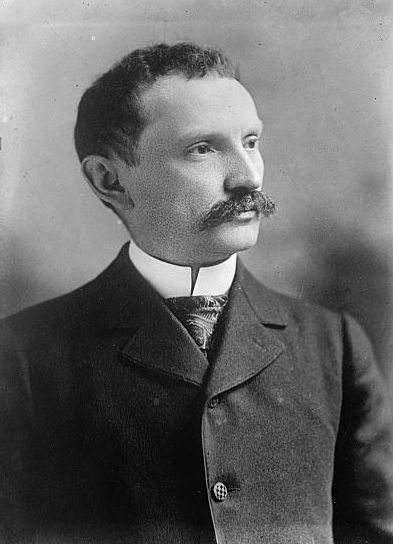 |
| Edward C Stokes (Wikimedia) |
Experimentation on the use of electrocution for capital punishment was done by Harold P Brown at Thomas Edison's laboratories in West Orange, NJ in the late 1880s. While Edison's better-known name is sometimes associated with the device, Brown is the actual inventor of the chair.
The first execution using an electric chair took place in New York State in 1890. The execution took eight minutes and was quite messy, prompting George Westinghouse to comment that "they would have done better using an axe."A reporter on the scene commented that electrocution was far worse than hanging.
Edison and Brown demonstrated the effectiveness of the use of alternating current for electrocution by killing a circus elephant in 1903.
Sunday, September 23, 2012
African-American Series: Metal Worker Murdered Over Woman (1917)
The 20 Sep 1917 edition of The Matawan Journal reported the murder of Lige Carrington by Archie Henderson at the Cliffwood Brick Company on Sunday 16 Sep 1917. The two men had argued over a woman -- Bessie Dennison -- when Henderson shot Carrington through the heart, killing him. Henderson fled and was on the loose at publication time, but Ms Dennison had been taken into custody as a material witness soon after the shooting, along with an unnamed man and a valise full of Mr Henderson's clothing.
Carrington had come from Haverstraw, New York, and was working at the Matawan Iron and Steel Company at the time of his death.
Carrington had come from Haverstraw, New York, and was working at the Matawan Iron and Steel Company at the time of his death.
Wednesday, August 29, 2012
History: The Matawan Journal Calls for Temperance Society, 1876
The 14 Oct 1876 edition of The Matawan Journal (pg 2 col 1) reported that John Hill, a saloon keeper in Keyport, fled the area, seemingly in anticipation of his second Grand Jury indictment for keeping a "disorderly house." This prompted Mr Hill to flee, or, to quote the newspaper, to take "leg bail."
"Whether he had heard of the indictment, or was assured that it would be made, we have not learned; but it is evident that his guilt was so well established in his own mind that he knew his next fate would be State Prison. To avoid this he has run away."
Getting on his temperance soap box, the newspaper editor complained that Hill was only one of many bar keeps in Monmouth and Middlesex counties who "are violators of the very license law that grants them the privilege to pour rum down the throats of their neighbors and impoverish their families." The bars were even selling liquor within earshot of the area churches' pulpits during worship service hours, he complained, a clear violation of the license, which sets rules to keep these businesses shuttered on Sundays. "Six week-days we would judge to be enough for the privilege of carrying on such a work of human destruction and family desolation as this. . ."
The editor, pointing out that there was no temperance society in Matawan, asked rhetorically, "Is not the evil practiced here? Have we become so highly moral as to need no institution to keep up this virtue save the churches?" The editor credited the churches for doing great work, but called for additional measures for those who had lost their way. "[T]here are many who seem to need another step before they enter the sanctuary, and that step is the temple of temperance."
The editor worried that local society was ignoring the problem as their boys faced the life of a drunkard and their girls the grim possibility of "becoming the wives of men whom intemperance may curse." In the meantime, the editor noted, municipal officials were continuing to issue licenses despite the peril around them. In an obvious reference to The Devil, the editor thought that local officials were turning a blind eye, instead "doing nothing to stay the fowler from spreading his net."
"Whether he had heard of the indictment, or was assured that it would be made, we have not learned; but it is evident that his guilt was so well established in his own mind that he knew his next fate would be State Prison. To avoid this he has run away."
Getting on his temperance soap box, the newspaper editor complained that Hill was only one of many bar keeps in Monmouth and Middlesex counties who "are violators of the very license law that grants them the privilege to pour rum down the throats of their neighbors and impoverish their families." The bars were even selling liquor within earshot of the area churches' pulpits during worship service hours, he complained, a clear violation of the license, which sets rules to keep these businesses shuttered on Sundays. "Six week-days we would judge to be enough for the privilege of carrying on such a work of human destruction and family desolation as this. . ."
The editor, pointing out that there was no temperance society in Matawan, asked rhetorically, "Is not the evil practiced here? Have we become so highly moral as to need no institution to keep up this virtue save the churches?" The editor credited the churches for doing great work, but called for additional measures for those who had lost their way. "[T]here are many who seem to need another step before they enter the sanctuary, and that step is the temple of temperance."
The editor worried that local society was ignoring the problem as their boys faced the life of a drunkard and their girls the grim possibility of "becoming the wives of men whom intemperance may curse." In the meantime, the editor noted, municipal officials were continuing to issue licenses despite the peril around them. In an obvious reference to The Devil, the editor thought that local officials were turning a blind eye, instead "doing nothing to stay the fowler from spreading his net."
Friday, August 24, 2012
History: Murder at the Farry Hotel (1870)
The front page of the 3 Sep 1870 edition of The Matawan Journal reported on a homicide that took place in the stables at Farry's Hotel in Matawan on the afternoon of 17 Aug 1870. A protracted argument turned violent when two ostlers (stable hands) came to blows over monies earned watering people's horses. Henry Rohd was angry at a co-worker named John, saying that the monies rightfully belonged to him. The argument, which had gone on for several days, eventually prompted a scuffle in the stables. John gouged Henry's face with a pitchfork, drawing blood, which led Henry to leave the stable and return with a heavy club with which to strike John. Henry ignored pleas of witnesses and hit John in the head. Locals thought John would recover, but he died overnight. An autopsy revealed he had several ounces of blood on the brain at the site of the contusion. Henry was turned over to the sheriff for prosecution.
The 1870 Federal Census shows Henry Rote, age 50, born in Bavaria, living in the household of John Farry, hotel keeper, and family.
Passenger lists show Henry Rohd, age 22, born in Germany, tailor by profession, departed Bremen, Germany aboard the Brig Louise and arrived at the Port of Philadelphia on 25 Oct 1842.
The 1870 Federal Census shows Henry Rote, age 50, born in Bavaria, living in the household of John Farry, hotel keeper, and family.
Passenger lists show Henry Rohd, age 22, born in Germany, tailor by profession, departed Bremen, Germany aboard the Brig Louise and arrived at the Port of Philadelphia on 25 Oct 1842.
Subscribe to:
Posts (Atom)